

What’s wrong with SMART? Or even SMARTER?
There’s nothing wrong with setting objectives that are specific, measurable, achievable, relevant and time-limited – or engaging and reviewed.
The person with a SMART target knows what to deliver.
But do they know why they are doing it? Do they have the will to see it through?
Let’s hear a WOOP!
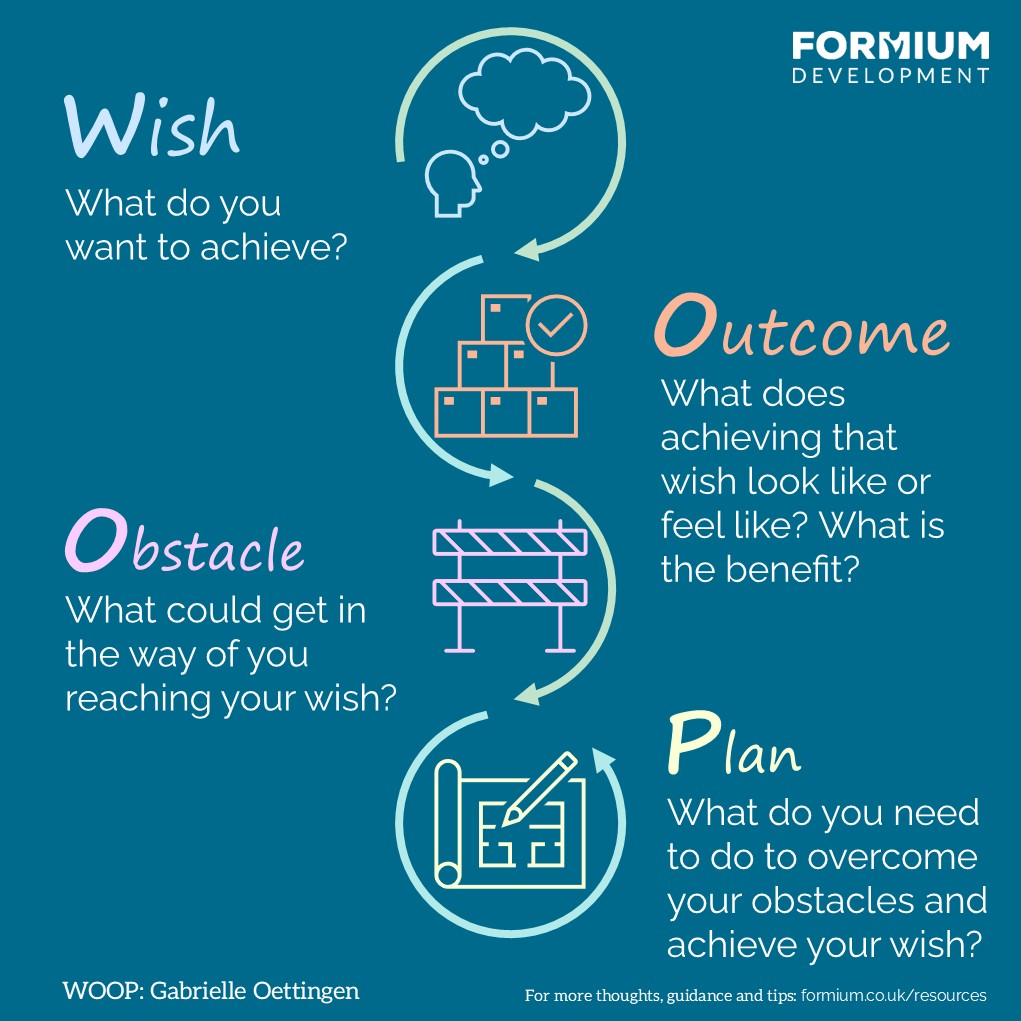
WOOP, developed by psychologist Gabriele Oettingen, comes more from the personal growth sector than a business model – but it has great strengths that you can leverage for the workplace: for yourself, for individual team members or the team as a whole.
Wish
Sometimes with SMART you get too deep into the details. WOOP starts by asking you to specify a big picture wish – an end result that you want to achieve.
“I want our team to hit our performance targets this year”
Outcome
This asks you to think in a bit more detail – how will you know you have reached your wish? What are the benefits you’ll experience? This covers some of the concrete results that you’ll see in SMART – but thinking about this in more depth will provide you with motivation and a greater sense of achievement when you arrive.
“People will gain a morale boost from hitting their targets. Better performance means better job sustainability.”
Obstacles
This is the key stage of WOOP. If you want to survive the storm, you need to know how to navigate the waves. This isn’t about being pessimistic, it’s about being resilient – finding the issues that you will need to address in your plan.
“Unanticipated requests from other departments can derail staff plans.”
Plan
In this stage, use a “If [x], then [y]” process to analyse those obstacles and find the resources and support you’ll need to overcome these challenges. Building this into your planning process means you are better prepared, less likely to suffer setbacks, and more likely to reach your end goal.
“If unanticipated requests come in, then team members will assess the priority rigorously using the ABCDE tool, not just accept the imposed deadlines. They will negotiate the requirements, personnel and timings by offering what is feasible and in line with our broader purpose.”
Use WOOP for motivation, resilience – and results
So, while SMART defines exactly what you want, WOOP is designed to be more motivating, more focused on resilience – and through these two aspects, can deliver better results.
Try the best of both worlds – combine SMART and WOOP
You can use WOOP as a standalone technique, but I’ve also seen managers have great success using it alongside SMART. You define the exact requirements through SMART, and then use WOOP to think more deeply and create a plan that is motivating, realistic and focused on solutions and success.